Popcorn ceilings date a room instantly, and removing them is one of the highest-impact upgrades in a 1960s–80s GTA home. In anything built before 1990, the first step is a lab test, not a scraper.
What Popcorn Removal Costs in the GTA
As of 2026, popcorn ceiling removal in the Toronto area runs $2–$6 per square foot for full-service work — containment, scraping, and re-finishing the surface — with a basic scrape alone at $1.75–$3.75 per square foot. Quotes that include a complete skim coat, priming, and painting push to $6–$10 per square foot in some Toronto pricing. For a typical 1,000-square-foot main floor, that means roughly $2,000–$6,000 for removal and refinishing, more with paint included.
Two qualifiers decide which end of the range you get. The first is what is under the texture: a ceiling that scrapes clean down to decent drywall costs far less to finish than one hiding botched seams or damage, which only becomes visible after scraping. The second is paint — popcorn that was painted over at some point resists wet-scraping and can multiply the labour.
And one qualifier comes before any pricing at all: the age of your home. If it was built before about 1990, the texture may contain asbestos, and testing is mandatory before anyone disturbs it. A quote given without asking your home's age, or without mentioning testing, tells you something about the contractor.
Pre-1990 Homes: Asbestos Testing Comes First
Textured and stippled ceilings were near-universal in GTA homes finished from the 1960s through the 1980s — the bungalows and back-splits of Scarborough, North York, and Etobicoke, and the side-splits of 1970s Mississauga and older Oakville pockets. That same era is peak asbestos: the mineral appeared in ceiling textures, drywall compound, and acoustic sprays, with phase-outs staggered through the late 1980s. The safe rule, and the one we follow: treat any ceiling installed before about 1990 as suspect until a lab says otherwise.
Testing is cheap relative to the stakes — $300–$800 for professional sampling and lab analysis. If the result is negative, removal proceeds normally. If it is positive, scraping becomes licensed abatement work under Ontario's asbestos regulations (O. Reg. 278/05), with sealed containment, negative air pressure, and certified disposal. Abatement pricing runs roughly $8–$20+ per square foot, with typical residential projects landing $3,000–$12,000 depending on area and complexity.
A positive test does not force removal. Encapsulation — skim-coating over the intact texture to lock it in place and create a smooth surface — is the recognized cheaper alternative, and undisturbed asbestos texture in good condition is not an emergency. What it rules out is the DIY weekend scrape, which can spread fibres through the whole house.
Scrape, Skim, or New Board: Three Paths to a Smooth Ceiling
There are three legitimate ways to get from popcorn to smooth, and the right one depends on what the test and a small trial patch reveal.
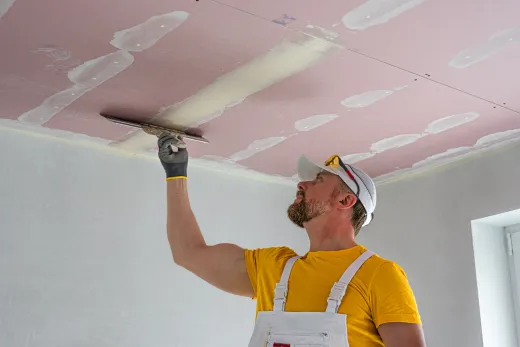
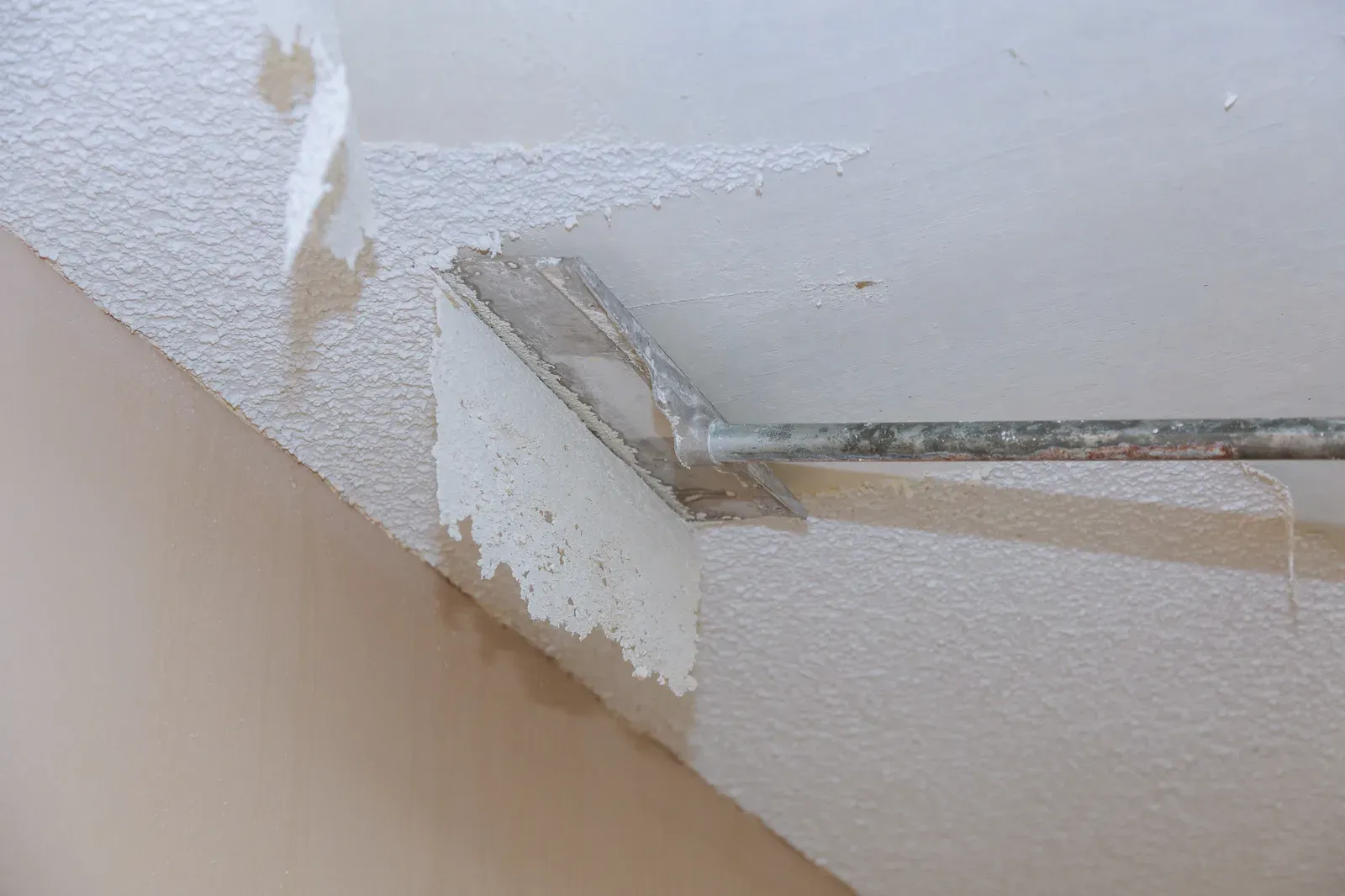
Wet-scrape and refinish is the standard path for unpainted, asbestos-free texture. The crew mists the ceiling, scrapes the softened texture off, repairs and re-tapes as needed, then skims and sands to a paint-ready finish. This is the $2–$6 per square foot territory.
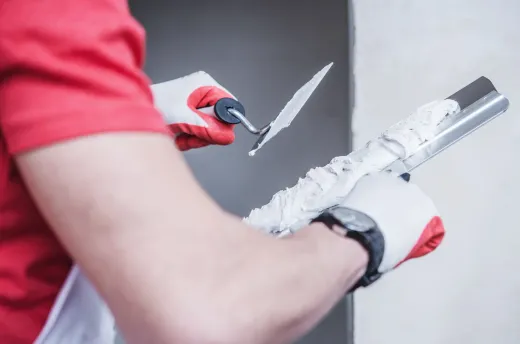
Skim-coat over top covers the texture with new compound instead of removing it — the go-to when texture is painted-over and stubborn, or as encapsulation after a positive asbestos test. Done properly it needs multiple coats feathered across the whole ceiling; a full skim is essentially a Level 5 finish, and skim labour alone runs $2.50–$3.50 per square foot.
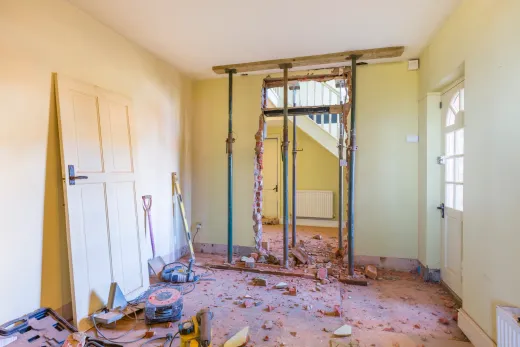
Overboard with new drywall screws fresh board straight over the old ceiling, burying the texture entirely. It wins when the underlying ceiling is damaged, sagging, or full of bad seams — you get a brand-new plane at standard installation pricing of roughly $3.00–$4.50 per square foot finished, and in some asbestos situations it avoids disturbance altogether. The trade-offs: it lowers the ceiling slightly and every fixture gets extended.
An experienced contractor scrapes a discreet test patch first — that square foot tells you which path the whole ceiling wants.
The Mess Factor: Containment Done Properly
Whatever the path, popcorn removal is one of the messiest jobs in renovation, and containment is where cheap crews cut corners you will find in your ducts for years.
Proper protocol looks like this: furniture out or sealed under plastic, floors covered in overlapping poly and protective board, walls masked full-height, doorways sealed into zippered plastic barriers, and — the step most often skipped — HVAC vents sealed and the system off so debris and sanding dust do not ride the ductwork through the house. Wet-scraping keeps debris local; the fine dust comes during sanding, which is why vacuum-assisted sanders matter as much as the plastic.
The questions that separate crews: How do you seal the work area? Do you shut down and mask the HVAC? Is sanding dust-extracted? Who does the final cleanup, and does the quote include it? Vague answers predict a dusty outcome.
Skim coats need to dry between passes — slower in humid GTA summer weeks — so a main-floor ceiling is typically a multi-day job with return visits. Living through it is manageable room-by-room; for whole-home scopes, many families schedule removal while away for a long weekend, the same logic as any dusty phase of a larger renovation.
Lighting Changes That Pair With Smooth Ceilings
A smooth ceiling changes how light behaves in the room — and the removal window is the cheapest moment you will ever have to upgrade the lighting, because the ceiling is already protected, staged, and about to be refinished.
The classic pairing is pot lights. Sixties and seventies GTA homes typically have a single centre fixture per room; adding recessed lighting while the ceiling is being refinished means every cut, wire hole, and patch disappears into the skim coat instead of becoming its own repair later. The same goes for relocating a dining fixture to actually sit over the table, or adding a properly rated ceiling-fan box.
Two compliance notes before the electrician arrives. All electrical work in Ontario requires a licensed electrical contractor (or the homeowner personally, in their own home) and an ESA notification — a separate permit stream from anything municipal, typically $90–$300 and normally built into the electrician's quote. We cover the distinction in our guide to ESA electrical permits versus building permits. And insulation-contact rated fixtures matter under attics, where pot lights meet blown insulation.
One warning from experience: smooth ceilings are less forgiving than popcorn. Texture hid every seam; paint on a smooth plane under raking light hides nothing, which is why skim quality — not scraping — is what you are really paying for.
Whole-Home vs Room-by-Room: The Economics of Scope
Popcorn removal rewards scale more than almost any other finishing job. Containment setup, floor protection, HVAC masking, and cleanup cost nearly the same for one room as for a floor of rooms — so a whole-home project prices far better than the same ceilings done one room at a time over three years. Asbestos testing also amortizes: one round of sampling covers the house.
Our decision guidance:
- Do the whole home at once if you are within a year of painting anyway, if ceilings are unpainted texture (easier scraping), or if you are between occupants — an empty house is the perfect popcorn-removal window.
- Do connected sightlines together at minimum. A smooth living room ceiling flowing into a textured hallway looks unfinished; break scope at doorways, not mid-view.
- Go room-by-room only when budget forces it, starting with the main living spaces and leaving bedrooms for later.
- Fold it into a larger renovation whenever one is on the horizon — if walls are opening for a full home renovation, smooth ceilings cost less as a line item than as a standalone project. The same logic applies in older condos, where board rules add logistics that favour doing ceiling work within a planned condo renovation.
For budgeting the bigger picture, our Toronto home renovation cost guide shows where ceiling work sits among the other line items — and if you want a real number for your ceilings, a few photos and your home's build year through our contact form gets you a free quote.
Ready to start your renovation?
Our team is here to help you bring your vision to life. Get a free, no-obligation quote today.
Get Free QuoteFrequently Asked Questions
Clear answers to the questions Ontario homeowners ask most.