Renovate or Tear Down and Rebuild? A GTA Decision Guide
When the repair list on an older GTA house stacks up far enough, demolishing and rebuilding starts to compete with renovating. Here is how the 2026 math, permits and tax rules actually compare.
The Cost Math: Gut Renovation vs Demolish-and-Build in 2026
Start with the renovation side, because it is better documented. A standard full renovation in the GTA runs $150–$400 per square foot as of 2026. A true gut — structural work, full rewiring, replumbing — runs $400 per square foot and up, with high-end gut projects reaching $450–$550+ once design fees, permits and HST are counted. On a 2,000 square foot house, a full renovation commonly lands between $300,000 and $800,000 before surprises.
A teardown-and-rebuild is always a custom quote, but the useful insight is this: the closer your renovation gets to replacing everything inside the shell, the narrower the gap becomes. Once you are gutting to the studs, underpinning the basement and reframing floors, you are spending new-construction money to keep old bones. That is the point where the rebuild math deserves a serious look — and where the ranges in our home renovation cost guide stop being the whole story.
Construction cost alone rarely settles it, though. Structure, zoning, taxes and time each push the answer — and they do not all push the same way.
When the Structure Decides for You: Foundations, Framing, Hazmat
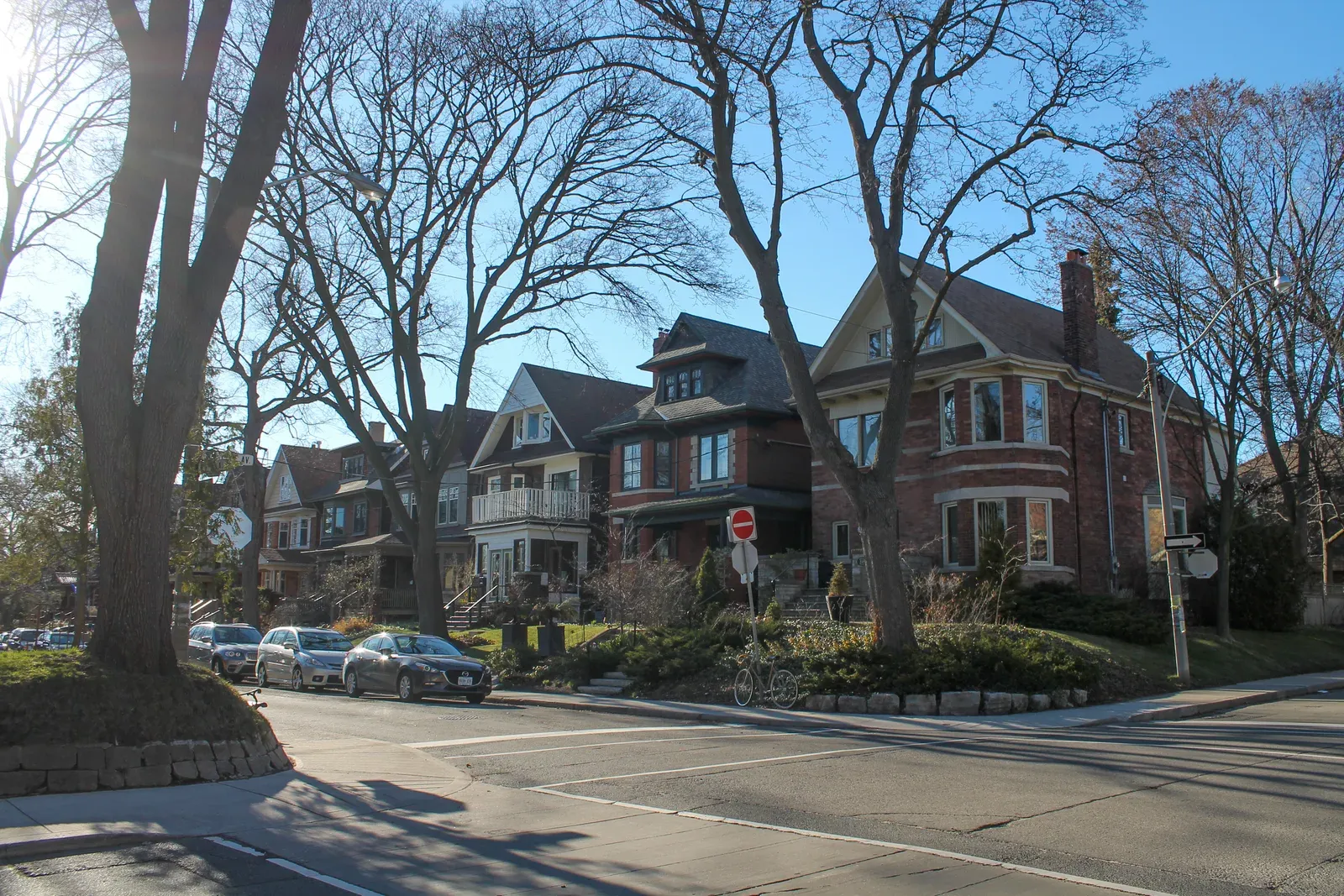
Some houses answer the question themselves. Pre-1920 stock in neighbourhoods like Riverdale, Parkdale and Hamilton's Durand often sits on rubble or brick foundations with low basements. Getting real ceiling height down there means underpinning — a typical Victorian semi project runs $40,000–$90,000 before any finishing.
Then the era-specific list stacks on top:
- Knob-and-tube wiring: a substantial rewire runs $15,000–$35,000, and insurers routinely refuse coverage on active K&T.
- Asbestos in plaster, drywall compound and flooring of homes built before about 1990: typical certified abatement projects run $3,000–$12,000.
- Galvanized supply piping: whole-home repipes run $2,000–$15,000 depending on size and access.
- Lead water services in pre-1955 areas: the private-side replacement typically costs $1,500–$3,500.
Any one of these is a renovation line item. All of them together, on a house that also needs a new layout and underpinning, is when clients start asking about demolition. The reverse is equally true: a straight, dry double-brick shell with decent ceiling heights is usually worth keeping, because that shell is the one thing new construction cannot buy back at a reasonable price.
Zoning and Permits: Why Rebuilds Face a Longer Approval Road
A renovation that stays inside the existing shell moves through permitting quickly. Interior alterations qualify for Toronto's Express Services stream — clean submissions can see a permit in about a week, and standard files clear in roughly 4–6 weeks. Our building permit guide covers the sequence.
A rebuild resets everything. The new house must satisfy today's zoning bylaw — height, lot coverage, setbacks, floor space — and older houses frequently exceed what current zoning would permit if built fresh. Rebuilding even roughly what you already have can require minor variances through the Committee of Adjustment, which adds months of process and invites neighbour scrutiny. A heritage designation or heritage conservation district can take demolition off the table entirely.
On fees, Toronto prices new houses at $18.56 per square metre of floor area versus $11.53 for interior alterations, plus demolition permitting. But the bigger cost is time: design, zoning review, possible variances and a full new-construction permit routinely consume the better part of a year before a shovel touches soil.
HST, Rebates and Tarion: The Financial Fine Print of Each Path
Tax treatment is where this comparison gets interesting — and where you need an accountant alongside your contractor.
A gut renovation that removes or replaces at least 90% of the interior can qualify as a substantial renovation for HST purposes. That opens the GST/HST New Housing Rebate: 75% of the Ontario portion of the HST back, capped at $24,000, regardless of the home's value. The federal portion only applies below a $450,000 post-renovation value, so most GTA claims are Ontario-only. You generally have two years from substantial completion to file.
New for 2026: the Ontario Budget announced an Enhanced New Housing Rebate of up to $80,000 for new or substantially renovated homes valued up to $1.5 million, tied to construction starting between April 2026 and March 2027. It is newly announced policy — confirm the details with an accountant before counting on it.
Warranty coverage differs too. A new build from an HCRA-licensed builder carries Tarion warranty: 1 year workmanship, 2 years on water penetration and major systems, 7 years structural. Renovations are not Tarion-covered — your protection is the contract, insurance and WSIB clearance, plus the contractor's own warranty. We back our renovation work in Toronto with a 2-year workmanship warranty.
Timelines Compared: Months of Renovation vs a Year-Plus Rebuild
Renovation timelines are measured in weeks and months. A kitchen gut runs 8–12 weeks; a whole-home renovation typically runs several months, and parts of it can sometimes be phased or lived through.
A rebuild is measured in years, door to door. Design and drawings, zoning review, any Committee of Adjustment cycle, demolition, then a long construction schedule — all while you pay to live somewhere else and carry the property. For a family already weighing an addition or renovation against moving, that carrying cost is often the deciding line. Rent or bridge financing for a year-plus belongs in the rebuild column of your spreadsheet, and it almost never appears in a builder's quote.
There is also risk asymmetry worth naming: renovation surprises arrive mid-project as change orders, while rebuild surprises tend to arrive up front, in approvals — a variance refused, a tree protection issue, a service connection problem. Neither path is surprise-free; they just take their surprises at different stages.
Five Questions That Settle the Renovate-or-Rebuild Debate
- Is the foundation worth keeping? Sound footings and a usable basement favour renovating; a rubble foundation needing $40,000–$90,000 of underpinning shifts the math toward rebuild.
- What does the hazmat and systems list total? Price the rewire, abatement and repipe honestly before comparing paths.
- Would today's zoning let you rebuild what you want? If variances look doubtful, the existing shell has legal value money cannot buy.
- Are you replacing 90% of the interior anyway? Then run the substantial-renovation HST numbers both ways with an accountant.
- How long can you live elsewhere? Months suits renovation; years suits rebuild.
Our rule after 20+ years in GTA houses: keep good bones, replace bad ones. If the shell is straight, dry and legally generous, a deep renovation almost always wins. If the structure, the basement and the zoning all fight you, stop paying to preserve problems. We are happy to walk a house with you and give a straight answer either way — call (416) 995-7855 or request a free quote.
Ready to start your renovation?
Our team is here to help you bring your vision to life. Get a free, no-obligation quote today.
Get Free QuoteFrequently Asked Questions
Clear answers to the questions Ontario homeowners ask most.