Skim coating is how a wall full of patches, wallpaper scars, or decades of roller texture becomes glass-smooth again. What it costs across the GTA, and when replacing the drywall is smarter.
What Skim Coating Is and What It Fixes
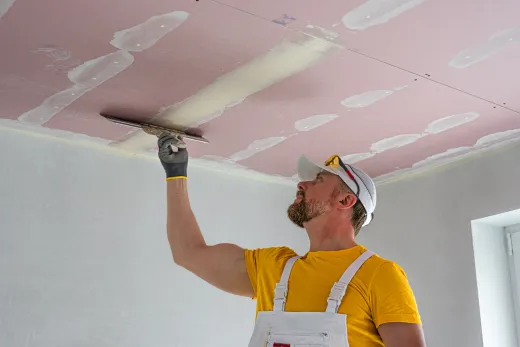
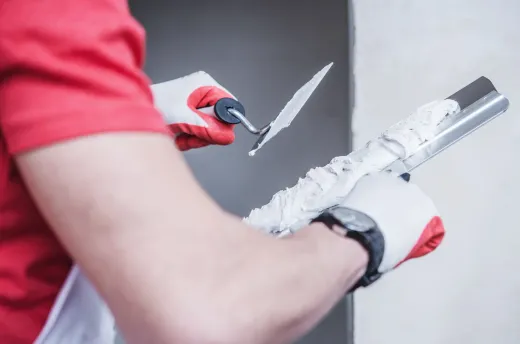
Skim coating means troweling thin coats of joint compound over an entire wall or ceiling — not just the joints — then sanding to a uniform, paint-ready surface. In trade terms it takes a wall from a standard Level 4 finish to Level 5, the top of the drywall finishing scale. As of 2026, that upgrade adds roughly $1.00–$1.50 per square foot over a standard finish on new board, and skim labour on its own runs about $2.50–$3.50 per square foot in the Toronto area.
Skim coating fixes the surface problems paint cannot: walls quilted with old patches, torn drywall paper left behind by wallpaper removal, roller stipple built up over decades of repaints, shallow gouges from furniture and picture hooks, and the faint joint banding that shows up on unskimmed walls the moment sunlight rakes across them.
What it does not fix is anything behind the surface. Crumbling plaster, water-damaged board, and mould need removal, not burial. A skim coat is a finishing tool — the last step before the best paint job a wall can take.
Post-Wallpaper Walls: The Classic Skim Candidate
The most common skim call we get in the GTA starts with wallpaper. Homes in 1980s and 90s subdivisions — Erin Mills and Meadowvale in Mississauga, Glen Abbey in Oakville, Thornhill on the Vaughan side — went up in the golden age of borders and full-wall paper, and a lot of it is finally coming down in this decade's renovations.
Stripping rarely goes cleanly. Adhesive residue stays bonded to the wall, and where the paper was hung on unprimed drywall, removal tears the board's own paper face. Paint applied over either one bubbles, crazes, or telegraphs every scar. The fix is mechanical: seal the damaged surface with a specialty primer, then skim the entire wall flat in two or three coats.
Century and pre-war homes present the other classic candidate. Plaster walls in Riverdale, the Junction, or Hamilton's Durand neighbourhood are often structurally sound but cosmetically rough — hairline crazing, old repairs, decades of paint edges. A bonding agent and a full skim preserves the original plaster and its sound-deadening mass at a fraction of the cost and mess of demolition.
Costs Per Room and Per Square Foot
GTA pricing for skim coating in 2026 breaks down like this:
- Skim (Level 5) labour alone: roughly $2.50–$3.50 per square foot of wall or ceiling surface.
- On new drywall, a Level 5 spec adds $1.00–$1.50 per square foot over the standard Level 4 finish, and expect 30–50% more finishing time.
- Taping and mudding generally runs $1.75–$3.75 per square foot, with full-surface skim work at the top of that band and beyond.
- Popcorn ceiling projects that end in a full skim, prime, and paint commonly land at $6–$10 per square foot all-in.
For a typical 12 x 12 bedroom with about 380 square feet of wall, skim labour alone is usually around $1,000–$1,400 before priming and paint. Bundling rooms drops the unit price because setup, masking, and dust control are fixed costs, which is why skim work is cheapest folded into a larger repaint or full home renovation. Ceilings price higher than walls — overhead troweling is slower — and condo work carries premiums for elevator booking and restricted hours. All figures pre-HST; the 13% applies to renovation contracts in Ontario.
Skim vs Reboard: The Decision Point
At some point patching the surface stops making sense and replacing it wins. New drywall installed — hung, taped, and finished — runs about $3.00–$4.50 per square foot in Toronto as of 2026, with sheet stock itself only $11–$15 per 4x8 sheet. That is not far from heavy skim work, so the decision rests on what is behind the surface.
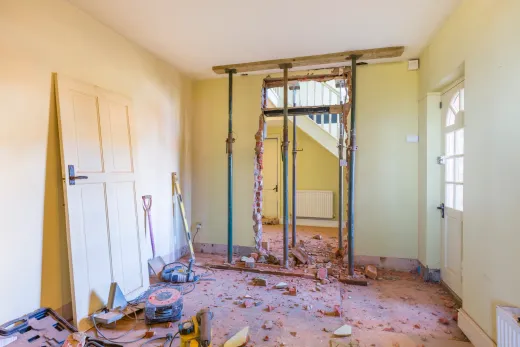
We lean toward reboarding when the wall is coming apart rather than just ugly: plaster that flexes or sounds hollow over large areas, water-stained or swollen board, walls needing new wiring or insulation anyway, or so many layers of paint and repair that skimming would take four coats. Opening the walls also lets a renovation add insulation and modern wiring in one pass — often the smarter spend in a pre-1960 house, and part of what drives renovation costs up or down.
We lean toward skimming when the substrate is solid and the problem is cosmetic. It preserves original plaster in older homes, avoids demolition dust and disposal, keeps trim and baseboards in place, and — in condos — avoids a far more disruptive approval and hoarding exercise for what is ultimately a surface repair.
Dust Control and Timeline Expectations
Skim coating is a wet trade with a dusty finale, and the difference between a professional job and a miserable week is containment. Expect plastic-sheeted doorways with zippered access, floor protection, sanding with vacuum-attached equipment, and furniture either removed or wrapped. In occupied homes we work room by room so the household keeps functioning — the same logic as any renovation you live through.
Time-wise, each coat needs to dry before the next, and most walls take two to three coats. A single room typically runs two to three working days: coat, dry, coat, dry, sand, detail. A main floor's worth of walls and ceilings is usually a one-to-two-week finishing package before paint. Humid GTA summers stretch drying times; winter jobs with the furnace running often move faster.
One flag for older homes: plaster, drywall compound, and textured finishes in houses built before about 1990 can contain asbestos. Sanding is exactly the activity that makes that dangerous, so we test suspect surfaces first — lab results cost a few hundred dollars and dictate whether standard dust control is enough.
Paint Results on Skimmed vs Patched Walls: Where to Spend
Paint is a magnifier, not a concealer. Sheen and sidelight make the case: under a north-facing window or a row of pot lights, a patched-but-unskimmed wall shows every filled spot as a subtle flat island in the surrounding stipple, because patches and original surface hold paint differently. A skimmed wall reads as one continuous plane. This is why Level 5 finishes are the standard spec for eggshell and any glossier sheen, feature walls, and ceilings under raking light.
Our guidance: skim when the wall will be lit hard or finished in anything shinier than flat, when wallpaper damage or patch density is high, or when you are already paying for premium paint — spending on paint over a rough substrate is the wrong place to save money. Skip the skim for flat-painted bedrooms in good shape, rental-grade refreshes, and walls slated for demolition in a future phase. If the walls are one line in a bigger project, our Toronto home renovation cost guide shows where finishing fits in the budget, and we are glad to price your walls specifically — quotes are free.
Ready to start your renovation?
Our team is here to help you bring your vision to life. Get a free, no-obligation quote today.
Get Free QuoteFrequently Asked Questions
Clear answers to the questions Ontario homeowners ask most.