Toronto's Express Services stream can issue a renovation permit in about five business days instead of six weeks. Here's which projects qualify, what it costs in 2026, and what gets files bounced.
What Express Services Is (and What Happened to FASTRACK)
Express Services is Toronto Building's expedited review stream for small residential projects. It replaced Residential FASTRACK — along with Commercial Xpress and the Sign Bylaw Unit — so when an older contractor talks about "getting it FASTRACKed," this is the current version of that process.
The appeal is speed. For a clean, zoning-compliant application, an examiner reviews the file within about three business days of intake approval, and the permit typically issues within one business day after you pay. Permit consultants peg the whole path at roughly five business days.
Compare that with the standard stream. Ontario legislates a 10-business-day first review for houses, but that clock only starts once the application is complete — in practice, straightforward interior-alteration permits in Toronto clear in about four to six weeks, and files with deficiencies or zoning flags run eight to fourteen. Our full walkthrough of building permits in Toronto covers the standard process in detail.
One more useful fact: Toronto runs a single building department covering the former Etobicoke, North York, Scarborough, East York and York. Same fees, same Express stream, whether the house is in Mimico or Agincourt.
Which Renovation Projects Qualify for the Express Stream
The eligible list covers most of the small residential work we quote every week:
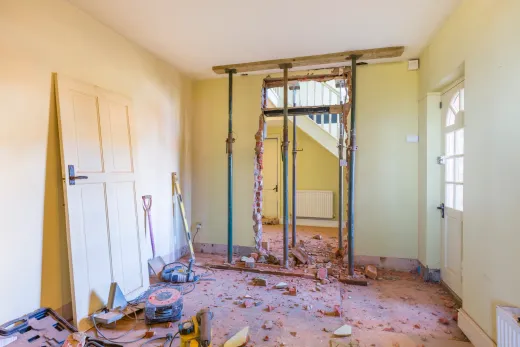
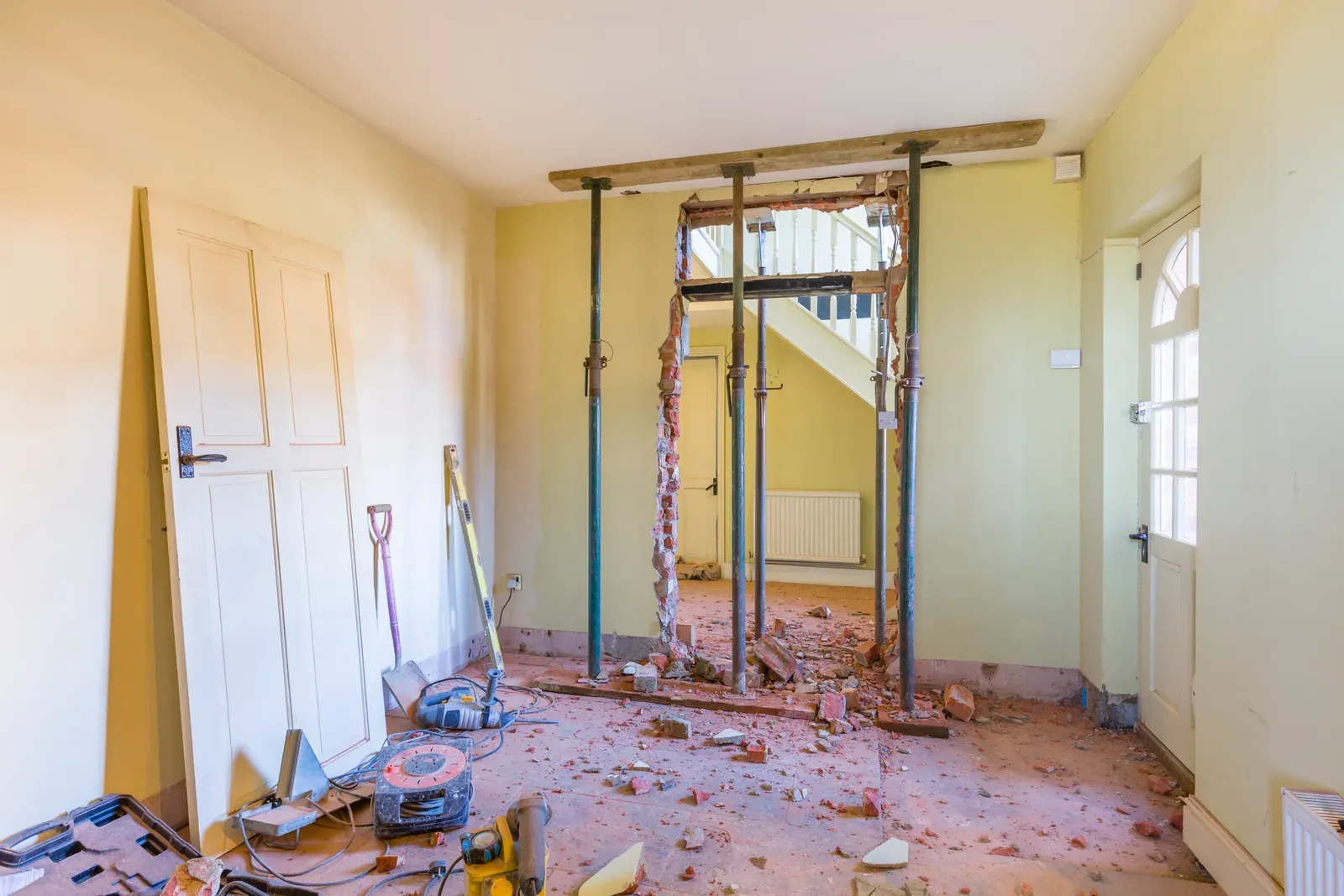
- Interior alterations — wall removals, kitchen and bathroom reconfigurations
- Basement work, including walkouts and underpinning
- Decks, porches, and detached structures such as garages and sheds
- Converting between one and two units (basement apartments)
- Standalone plumbing permits and building-mounted solar
- Minor fire damage repairs
The basement line surprises people. A basement renovation in Toronto that adds a bathroom or creates a second suite needs a permit almost every time, and Express Services was built for exactly that kind of file. Even underpinning — normally the scariest word in a permit application — sits on the eligible list.
Some secondary sources mention an under-100 m² size cap for residential Express files. The City only publishes explicit size caps for commercial projects, so if your renovation is unusually large, confirm eligibility at intake rather than assuming.
The Five-Business-Day Path: Intake, Review, Payment, Issuance
The process runs in four steps, and the first one decides everything.
Intake screening confirms the application is complete and the project complies with zoning. This is where most delays are born: a missing drawing, an unsigned form, or a deck that sits too close to a lot line stops the clock before it starts. Once intake approves the file, an examiner reviews it within about three business days. You pay, and the permit typically issues the next business day.
How you apply depends on the project. Garages, decks, porches and sheds go through the City's online portal. Other residential scopes — interior alterations, basements, plumbing — are submitted by email to the City's building applications address.
The catch worth underlining: every resubmission after a deficiency letter restarts a review cycle. A five-day stream with two rounds of corrections becomes a three-week stream. The projects that genuinely clear in a week are the ones where the drawings answered the examiner's questions before they were asked.
2026 Toronto Permit Fees: $214.79 Minimum to $11.53/m² Alterations
Express Services uses the same fee schedule as standard review — you pay for speed with preparation, not money. The 2026 rates, effective January 1:
- Minimum permit fee: $214.79
- Residential interior alterations: $11.53 per m² of work area
- Basement finishing and underpinning class: about $6.20 per m²
- Plumbing: $23.20 per fixture
- Furnace or boiler replacement, or adding A/C: $214.79 flat; full HVAC systems $270.64
- Third and subsequent reviews, or post-issuance changes: $92.79 per hour
Real-world totals for a typical renovation permit package — building plus plumbing or mechanical plus zoning review — land roughly $700 to $3,500. A small bathroom or basement scope can come in near the minimum. Toronto adjusts fees every January 1; the 2026 schedule rose about 4% over 2025.
Electrical work is never part of the municipal permit. It runs through a separate ESA notification, usually filed by your electrician and built into their quote at roughly $90 to $300 for a typical renovation. The difference matters when you're budgeting, so we've broken down ESA electrical permits versus building permits separately.
What Disqualifies You: Additions, Heritage Homes, Open Violations
Three categories are excluded outright: additions of any kind, heritage properties, and attached garages or carports. If you're topping up a bungalow or extending the back of a Riverdale semi, you're in the standard stream no matter how tidy the drawings are.
Properties with outstanding violations can also be redirected to standard review — worth checking before you apply if you bought a house with a history.
The quieter disqualifier is zoning. Express Services only works for projects that comply with the zoning bylaw as-of-right. The moment your project needs relief — a side-yard setback, extra height, more coverage — you're headed to the Committee of Adjustment for a minor variance, which adds months, not days. This is why we run a zoning check before drawing anything: finding the problem on paper costs an afternoon; finding it at intake costs the whole schedule.
How We Prepare Drawings That Pass First Review
Express Services rewards one thing: a complete, unambiguous application. Ours include measured existing and proposed floor plans, structural details with engineered beam sizing wherever a wall comes out, and every form filled in before submission. When the examiner has nothing to ask, the file moves.
When does the Express stream actually matter? If you're sequencing trades around a kitchen wall removal or racing a basement-suite tenant move-in date, five business days versus six weeks changes the whole calendar. If your project needs an addition or a variance anyway, there's no shortcut — plan the standard timeline and know what happens if a permit gets rejected so a deficiency letter doesn't derail you.
We've been managing Toronto permits since 2004, and preparing the application is part of every quoted project — drawings, zoning check, submission and inspections through to permit close-out. Call (416) 995-7855 or request a free quote and we'll tell you honestly whether your renovation qualifies for the fast lane.
Ready to start your renovation?
Our team is here to help you bring your vision to life. Get a free, no-obligation quote today.
Get Free QuoteFrequently Asked Questions
Clear answers to the questions Ontario homeowners ask most.