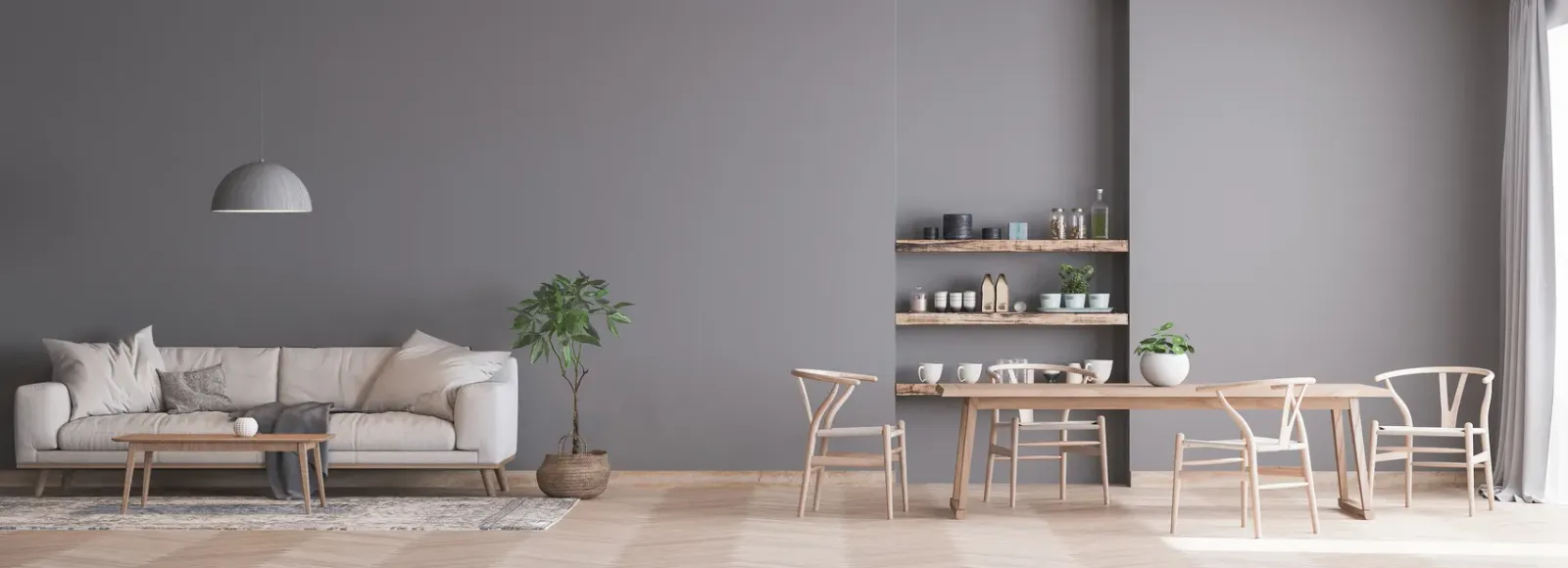
Flat paint is the default, not the ceiling. Venetian plaster, limewash, and Roman clay are showing up in GTA renovations for a reason — and each behaves very differently on the wall and in the budget.
The Texture Comeback in High-End GTA Interiors
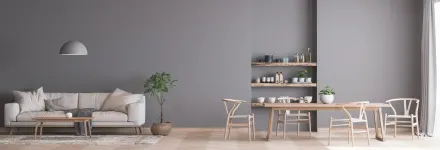
Walk through a recent high-end renovation in Rosedale, Lorne Park, or an Oakville custom build and the walls have changed. Instead of uniform flat paint, you see surfaces with depth — soft cloudiness that shifts with the daylight, subtle burnished sheen behind a fireplace, powder rooms wrapped in something that looks carved rather than rolled. Mineral and hand-applied finishes are back in GTA interiors, driven by the same appetite that brought natural stone, white oak, and lime-based palettes into mainstream renovation.
There is also a practical logic to it here. Toronto's pre-war housing stock was plastered, not drywalled — the walls of a Riverdale Edwardian were always meant to have material presence, and mineral finishes suit those rooms in a way builder-flat latex never quite does. In new spaces, texture solves a different problem: large open-concept walls and double-height foyers can feel flat and cavernous under one unbroken paint colour, and a finish with movement gives the eye something at every scale.
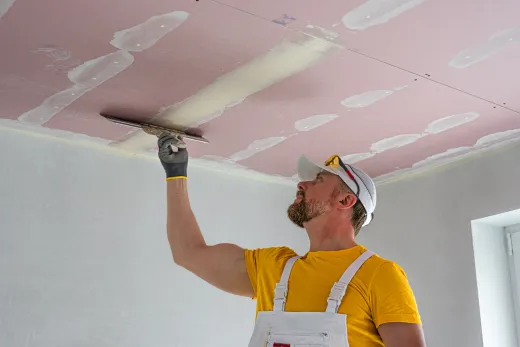
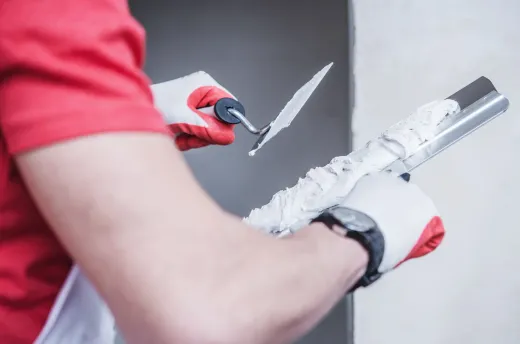
These are specialty finishes, applied by hand, trowel or brush, over meticulous prep. They are not a paint upgrade; they are a different trade. That changes where they make sense — and that is most of what this post is about.
Venetian Plaster, Limewash, Roman Clay: Knowing the Difference
The three names get used interchangeably, and they should not be.
- Venetian plaster is a lime-based plaster applied in multiple thin trowel coats, then compressed and burnished. Done traditionally it develops a polished, marble-like depth and a slight sheen. It is the most labour-intensive of the three and the most durable — a hard mineral surface, not a coating.
- Limewash is a mineral paint made from slaked lime, brushed on in translucent coats. It dries to a soft, matte, cloud-like variation with visible brush movement. It is the most affordable entry into the category and the easiest to renew, but it is a delicate, chalky surface that marks with scuffs.
- Roman clay is a clay-based compound spread with a trowel or blade in thin overlapping strokes, landing between the other two: suede-matte depth, smooth to the touch, no aggregate texture. Sealed with wax or a matte sealer it stands up well in living spaces.
All three are breathable mineral finishes, naturally alkaline and moisture-tolerant, which is part of why lime plasters have survived centuries of use. What they share is honesty: every pass of the trowel or brush stays visible. The applicator's hand is the finish.
Feature Walls and Powder Rooms: The Best First Projects
Our advice to most clients: do not start with the whole main floor. Start where a small area delivers a large effect.
Powder rooms are the perfect proving ground. The room is small, so premium finish over every wall is affordable; it has no tub or shower generating sustained steam, so delicate finishes survive; and it is the one room every guest sees up close. A limewashed or Roman clay powder room punches far above its square footage — which is why we treat wall finish as a headline decision in a powder room renovation, alongside the vanity and lighting.
Feature walls come next: the fireplace surround, the wall behind a bed, a dining room with good side light. Mineral finishes reward raking daylight, so a wall that catches morning or evening sun shows the material at its best. Range hood surrounds and kitchen feature walls in Venetian plaster have become a signature of current GTA kitchen design, though we keep delicate finishes away from the splash zone itself.
Full-room and whole-floor applications are absolutely done — limewashed principal bedrooms are lovely — but they multiply both cost and the consequences of choosing the wrong product for how the room is used, so earn your confidence on a small room first.
What Specialty Finishes Cost vs Premium Paint
Benchmark against paint first. Professional interior repainting in the GTA runs roughly $1.80–$4.50 per square foot of wall area as of 2026, with single rooms closer to $5 per square foot because setup and masking are fixed costs. That is the baseline any specialty finish competes with.
Mineral finishes sit above that baseline, for structural reasons: materials cost more, application is multi-coat hand work by a finisher rather than a roller crew, and the prep spec is higher — a skim-coated Level 5 surface, which itself adds about $1.00–$1.50 per square foot over a standard drywall finish. True burnished Venetian plaster is the top of the category, priced per project by specialty applicators; limewash is the most accessible; Roman clay lands between. Applicators quote on the specific wall — size, height, access, existing surface, and the number of coats the look demands — so treat any flat per-foot number you read online with suspicion and get the wall priced.
Our budgeting guidance is to think in multiples of the paint cost for the same wall, concentrate the spend where it is seen, and remember the quiet add-ons: prep, sealers, and protection of adjacent finishes. These are exactly the soft costs that surprise renovation budgets when they are not itemized up front. Quotes typically exclude 13% HST.
Durability, Touch-Ups, and Living With Texture
The trade-off with hand-applied finishes is not fragility across the board — it is that they age and repair differently than paint.
Burnished Venetian plaster is genuinely hard; it takes decades of normal living, and small chips can be re-troweled by a finisher. Sealed Roman clay handles family life in living rooms and bedrooms well. Limewash is the one to place thoughtfully: it is a matte, chalky mineral surface that scuffs in hallways, stair walls, and mudrooms where shoulders and backpacks drag. In those zones we either specify a sealed finish or keep durable paint and let the mineral finish live one room over.
Touch-ups are the honest caveat. Flat paint touch-ups vanish; a hand-finished wall cannot be spot-corrected invisibly, because the repair's trowel or brush pattern will not match its surroundings. Small repairs are blended by refinishing a panel or a full wall plane. Keep the finisher's name, product, and tint recorded — future you will need all three.
Humidity, at least, is not the enemy people assume. Lime finishes are breathable and alkaline, historically used in bathrooms and even steam rooms; what they need in a GTA bathroom is the right sealer and honest ventilation rather than exile from wet rooms entirely. Direct shower spray is still tile territory.
Prep Requirements — and How to Decide If This Is for You
Here is the part applicators wish every homeowner knew: these finishes forgive nothing underneath. Paint at eggshell sheen already telegraphs bad drywall; a burnished plaster with side light on it broadcasts every ridge, patch, and taping line. The standard substrate is a Level 5 skim-coated surface, primed with the system's specified primer — on old plaster walls in a century home, that means stabilizing and skimming first; on new drywall, it means paying for the top finishing spec before the finisher arrives. Budget prep as part of the finish, not as a separate maybe.
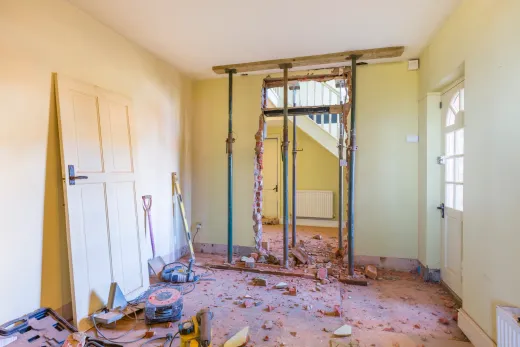
So: is it for you? Choose a mineral finish when the room has good natural light, when you want the walls themselves to be the design feature rather than a backdrop, and when the budget can carry hand work in the visible rooms. Stay with premium flat paint when walls are high-traffic, when you repaint colours frequently, or when the budget is better spent on renovation choices that hold their value. A sensible middle path we often build: mineral finish in the powder room and one feature wall, Level 5 and premium paint everywhere else. If you are renovating anyway, that is the cheapest moment to do it right — prep is already in scope. Our home renovation projects fold specialty finishes into the schedule, and a free quote can price both paths side by side.
Ready to start your renovation?
Our team is here to help you bring your vision to life. Get a free, no-obligation quote today.
Get Free QuoteFrequently Asked Questions
Clear answers to the questions Ontario homeowners ask most.